Emergency
ECG Masterclass
Learn the Life Threatening ECG Patterns Every Doctor Should Recognize Before
It's Too Late
Very few Doctors were taught the systematic way about how to recognize dozens of ECG Patterns that can cost us a life and demands immediate intervention.
Master a Practical 7-Step Framework to confidently recognize life-threatening ECGs in under 2 minutes, intervene earlier, and stop relying on WhatsApp groups for urgent interpretations.
✔ 13 Modules
✔ 58 Video Lessons
✔ 300+ Minutes
✔ Lifetime Access
Founding Member Launch Offer
PKR 997 ONLY
My goal is simple.
To make Emergency ECG interpretation training accessible to as many doctors as possible.
Have You Ever Experienced This?
It's 2 AM.
Emergency Department.
Monitors beeping.
Patients waiting.
A Staff Nurse hands you an ECG.
"Doctor, can you quickly review this ECG?"
And immediately questions start running through your head.
Is this just sinus tachycardia?
Could this be Wellens?
Is this hyperkalemia?
Do I need pacing?
Should I thrombolyse?
Should I shock?
Or..
Do I send the ECG to a WhatsApp group or to any of our colleague
and wait for someone else to tell me what I'm looking at?
Because if we're honest...
Many doctors feel comfortable recognizing STEMI.
Far fewer feel comfortable identifying:
Brugada Syndrome
De Winter Pattern
Bifascicular Block
HOCM
Cardiac Tamponade
Digoxin Toxicity
Hyperkalemia
WELLENS Syndrome
And dozens of other ECG findings that require timely recognition.
And these are often the ECGs that matters the most.
WHY EMERGENCY ECG INTERPRETATION MATTERS
Missing an ECG diagnosis isn't about getting an exam question wrong.
It's much bigger than that.
It's about standing beside a patient and understanding what their heart is trying to tell you. Because recognizing a dangerous ECG pattern earlier can lead to faster assessment, earlier escalation, and more timely treatment.

Recognize Hyperkalemia Early.
Treat before cardiac arrest becomes a possibility.
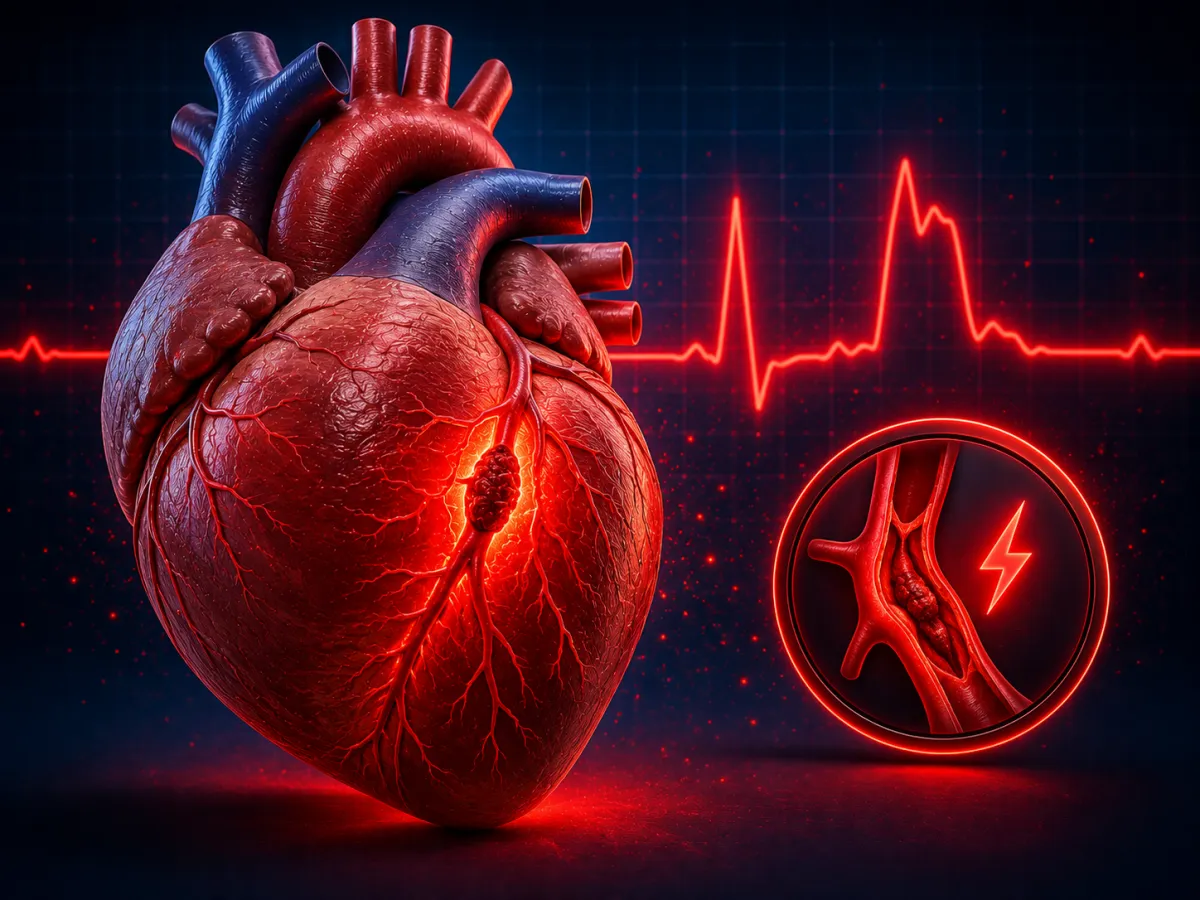
Identify STEMI
Quickly
Activate reperfusion pathways sooner.

Recognize Complete Heart Block
Prepare pacing before deterioration.
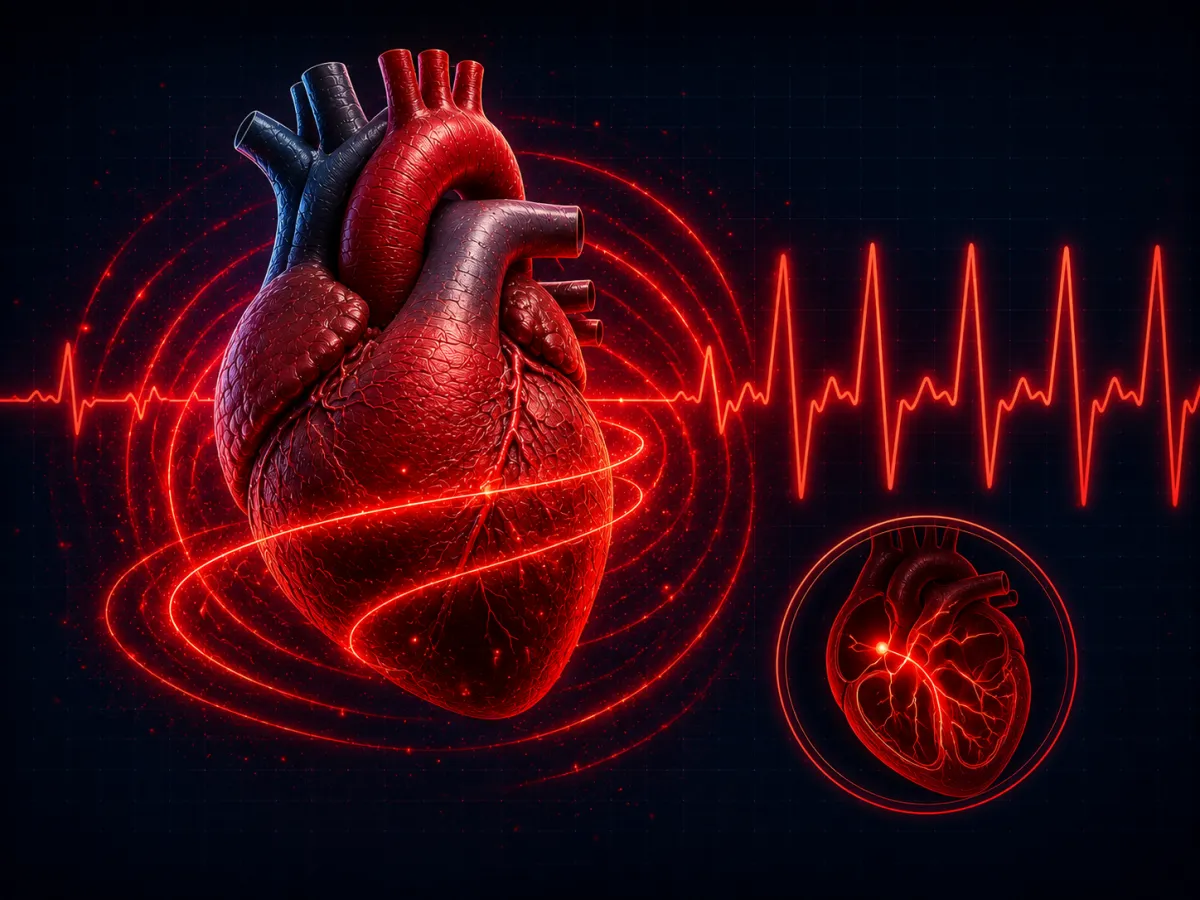
Identify Ventricular Tachycardia
Initiate timely emergency management.

Recognize High-Risk ECG Patterns
Escalate care with greater confidence.
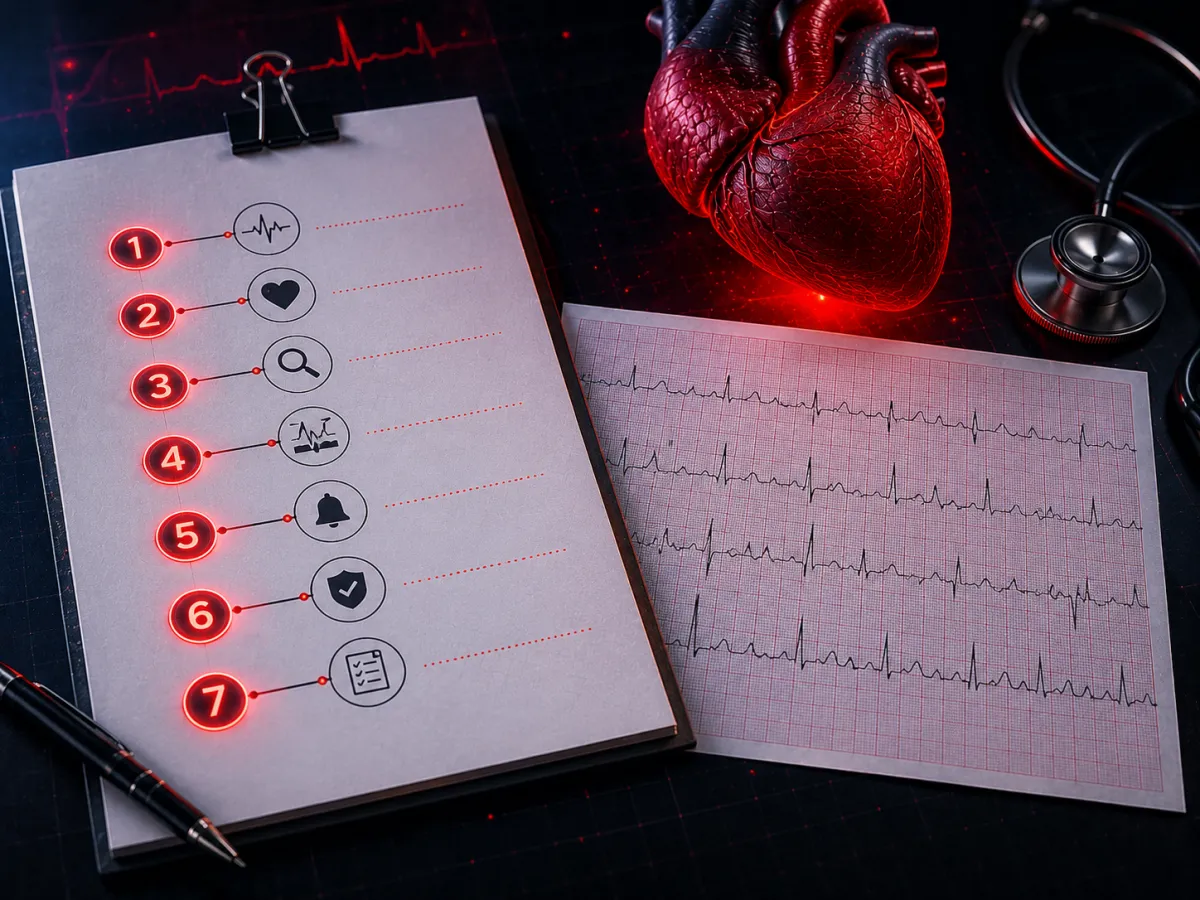
Follow a Structured Approach
Reduce hesitation during critical moments.
Your ability to read an ECG can change the entire outcome.
The good news ? You can master this skill.
And that's exactly what this masterclass is designed to help you do.
Emergency
ECG Masterclass
Learn the Life Threatening ECG Patterns Every Doctor Should Recognize Before
It's Too Late
Very few Doctors were taught the systematic way about how to recognize dozens of ECG Patterns that can cost us a life and demands immediate intervention.
Master a Practical 7-Step Framework to confidently recognize life-threatening ECGs in under 2 minutes, intervene earlier, and stop relying on WhatsApp groups for urgent interpretations.
✔ 13 Modules
✔ 58 Video lessons
✔ 300+ Minutes
✔ Lifetime Access
Founding Member
Launch Offer
PKR 997 ONLY
My goal is simple.
To make Emergency ECG interpretation training accessible to as many doctors as possible.
Have You Ever Experienced This?
It's 2 AM.
Emergency Department.
Monitors beeping.
Patients waiting.
A Staff Nurse hands you an ECG.
"Doctor, can you quickly review this ECG?"
And immediately questions start running through your head.
Is this just sinus tachycardia?
Could this be Wellens?
Is this hyperkalemia?
Do I need pacing?
Should I thrombolyse?
Should I shock?
Or..
Do I send the ECG to a WhatsApp group or to any of our colleague
and wait for someone else to tell me what I'm looking at?
Because if we're honest...
Many doctors feel comfortable recognizing STEMI.
Far fewer feel comfortable identifying:
Brugada Syndrome
De Winter Pattern
Bifascicular Block
HOCM
Cardiac Tamponade
Digoxin Toxicity
Hyperkalemia
WELLENS Syndrome
And dozens of other ECG findings that require timely recognition.
And these are often the ECGs that matters the most.
WHY EMERGENCY ECG INTERPRETATION MATTERS
Missing an ECG diagnosis isn't about getting an exam question wrong.
It's much bigger than that.
It's about standing beside a patient and understanding what their heart is trying to tell you. Because recognizing a dangerous ECG pattern earlier can lead to faster assessment, earlier escalation, and more timely treatment.
Recognize Hyperkalemia Early.
Treat before cardiac arrest
becomes a possibility.
Identify STEMI Quickly
Activate reperfusion pathways
sooner.
Recognize Complete Heart Block
Prepare pacing before
deterioration.
Identify Ventricular Tachycardia
Initiate timely
emergency management.
Recognize High-Risk ECG Patterns
Escalate care with
greater confidence.
Follow a Structured Approach
Reduce hesitation during
critical moments.
Your ability to read an ECG can change the entire outcome.
The good news ? You can master this skill.
And that's exactly whatthis masterclass is designed
to help you do.
Your ability to read an ECG can change the entire outcome.
The good news ?
You can master this skill.
And that's exactly what
this masterclass is designed
to help you do.
WHY I HAD TO CREATE
THIS MASTERCLASS ?
During my House Job, I wanted a Cardiology rotation.
But I didn't get one.
At that stage, I could confidently identify STEMI Only.
But beyond that, ECG interpretation felt uncertain.
Later, while preparing for my MRCEM examinations, I realised Emergency ECG interpretation extends far beyond myocardial infarction.
There were dozens of dangerous ECG patterns that I had never been taught systematically.
So I studied them. Practised them. Taught them.
Eventually conducted Emergency ECG workshops for junior doctors at my teaching hospital.

Dr. Muhammad Nabeel
MBBS, MRCEM Part I & II Cleared
Resident Anaesthesiology
Emergency ECG Workshop Instructor
Emergency Medicine Educator
And then I realised something. The issue wasn't intelligence.
The issue wasn't effort.
The issue was that most of us had never been given a practical framework
specifically designed for recognizing Emergency ECG Patterns.
'' That's why I created this Masterclass ''
Not to make doctors into Cardiologists.
But to help them become more confident recognising life-threatening ECG patterns,
make faster clinical decisions, and intervene earlier when every minute matters.
“The framework I teach in this Masterclass is the same framework I wish someone
had taught me during my House Job.”
Now, I want to pass that framework on to you.
IMAGINE YOUR NEXT SHIFT
You See an ECG
You Stay calm, Think clearly, and Act fast.
When you have a structured framework for interpreting emergency ECGs,
uncertainty is replaced by confidence—and every clinical decision becomes a little clearer.
BEFORE THE MASTERCLASS

You second-guess yourself
Every unfamiliar ECG feels overwhelming.
You hesitate
You're never quite sure whether to escalate care.

You depend on WhatsApp
You wait for someone else to confirm your interpretation.

You recognise only the obvious
Dangerous ECG patterns are easy to miss.

Every ECG feels different
There's no structured way to approach it.
→
AFTER THE MASTERCLASS

You approach ECGs systematically
There's no structured way to approach it.

You think with greater confidence
Your decisions become faster and more structured.it.

You rely less on others
You discuss cases instead of depending on others for every interpretation.

You recognise high-risk patterns earlier
You know what findings deserve urgent attention..

Every ECG follows the same framework
One practical system you can apply every shift.
A JOURNEY FROM CONFUSION TO CONFIDENCE
⬇
7-Step Practical Framework
One structured system which you can apply to every
emergency ECG—helping you recognize
life-threatening patterns faster and approach every
tracing with greater confidence.
⬇
Confident Clinical Decision
Recognize high-risk ECGs earlier.
Think systematically instead of guessing.
Know when to escalate care.
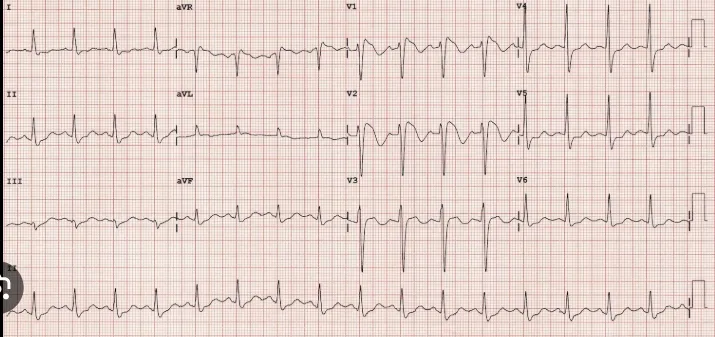
NOTE : By Following the 7-STEP Practical Approach you will be able to diagnose the above ECG Pattern as BRUGADA SYNDROME , which is a life-threatening condition
that can predispose to Ventricular Arrhythmias.
WHAT YOU'LL LEARN
13 Modules, 58 Lessons, 300+ Minutes.
Every life-threatening ECG pattern covered.
A structured framework that helps you recognize, interpret, and confidently act on life-threatening ECGs in the Emergency Department.

Module 01
Master the 7-Step ECG Framework
Develop one structured approach you can apply to every emergency ECG with confidence.
Module 02
Recognize AV Blocks & Conduction Disorders
Identify heart blocks accurately and know when urgent pacing is required.
Module 03
Identify Pre-Excitation Syndromes
Recognize WPW and LGL patterns before they become dangerous emergencies.
Module 04
Master Junctional & Escape Rhythms
Know when slow rhythms are benign—and when immediate intervention is needed.
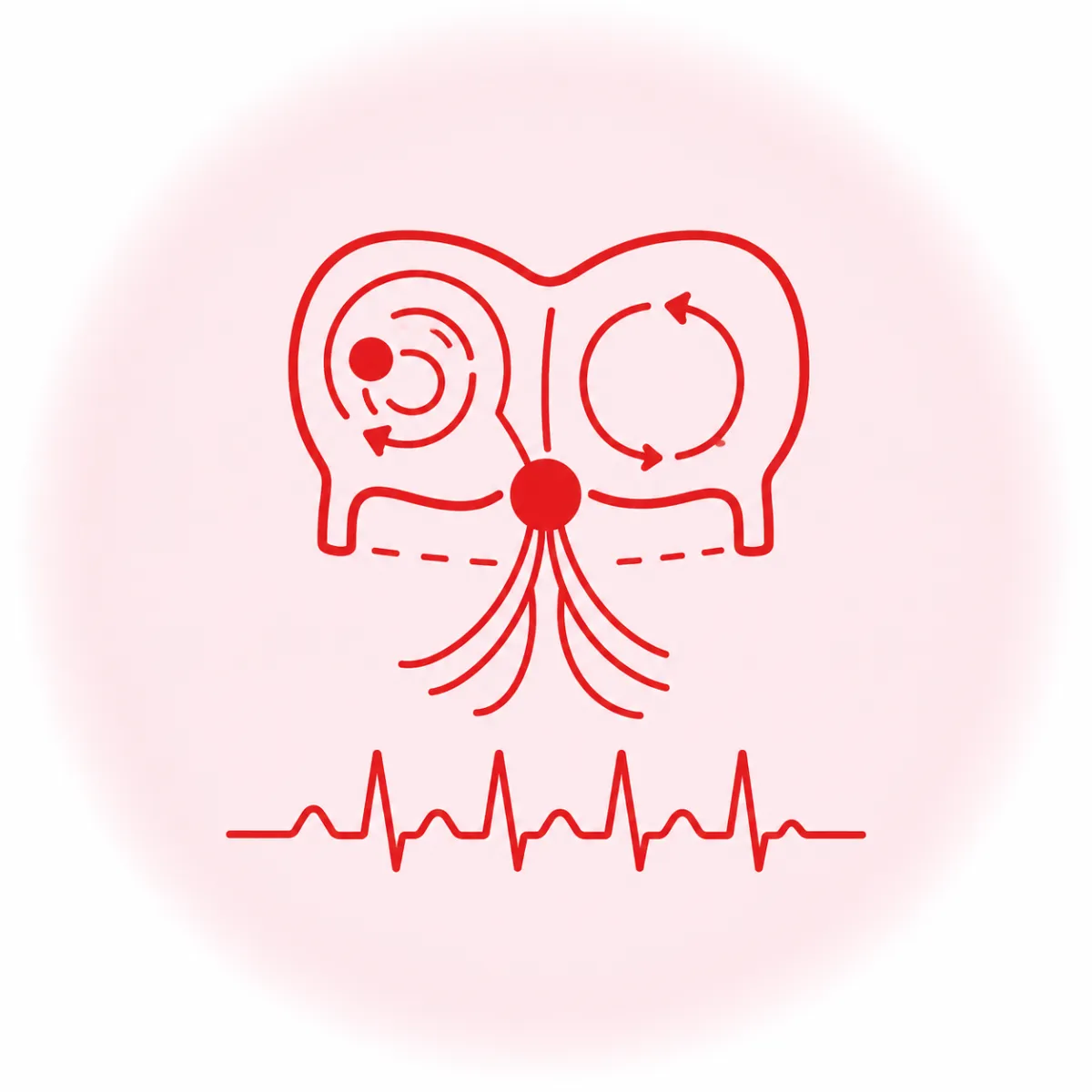
Module 05
Interpret Supraventricular Tachycardias
Differentiate AF, AFL, SVT and sinus tachycardia with a systematic approach.
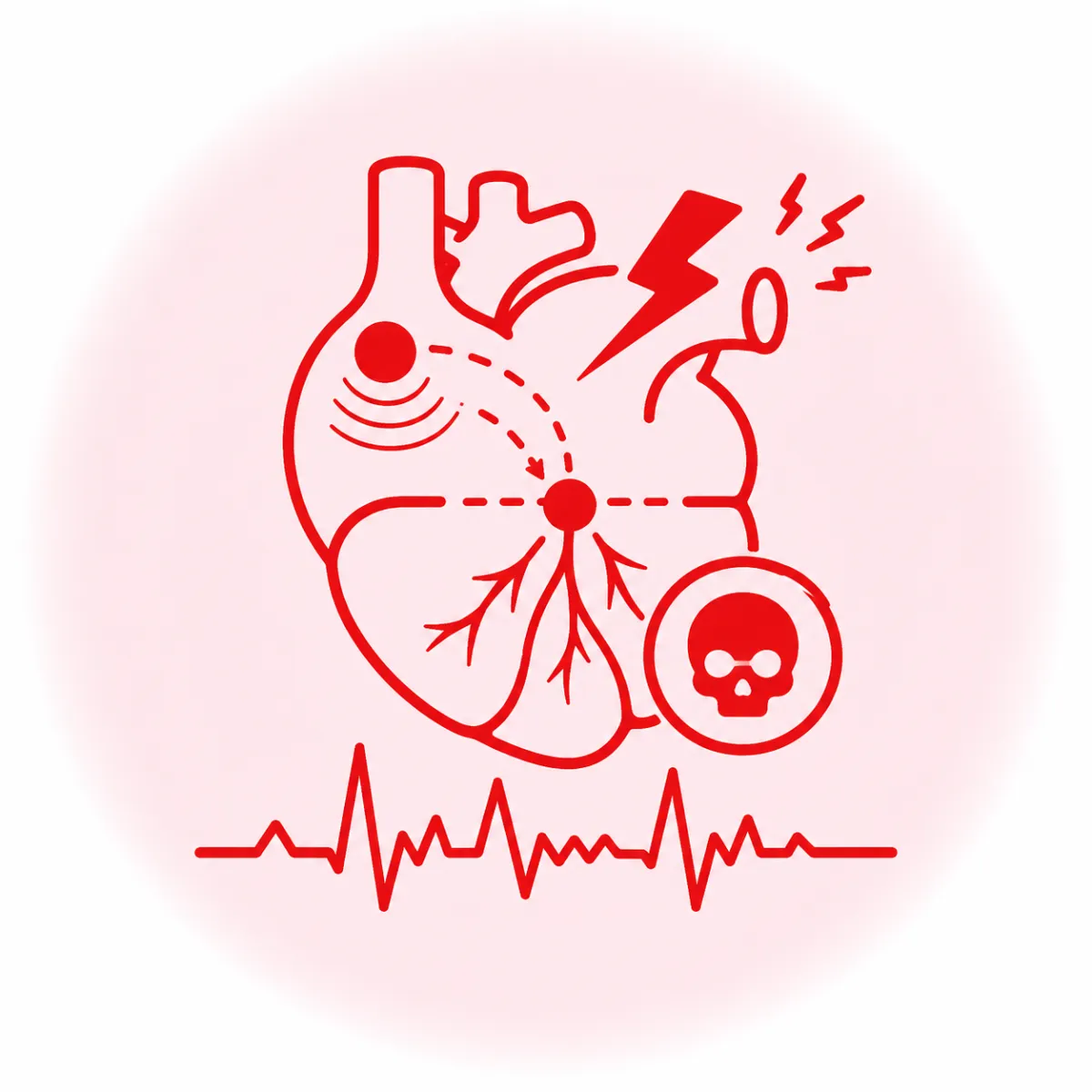
Module 06
Recognize Deadly Ventricular Arrhythmias
Identify VT, VF and other life-threatening ventricular rhythms without hesitation.
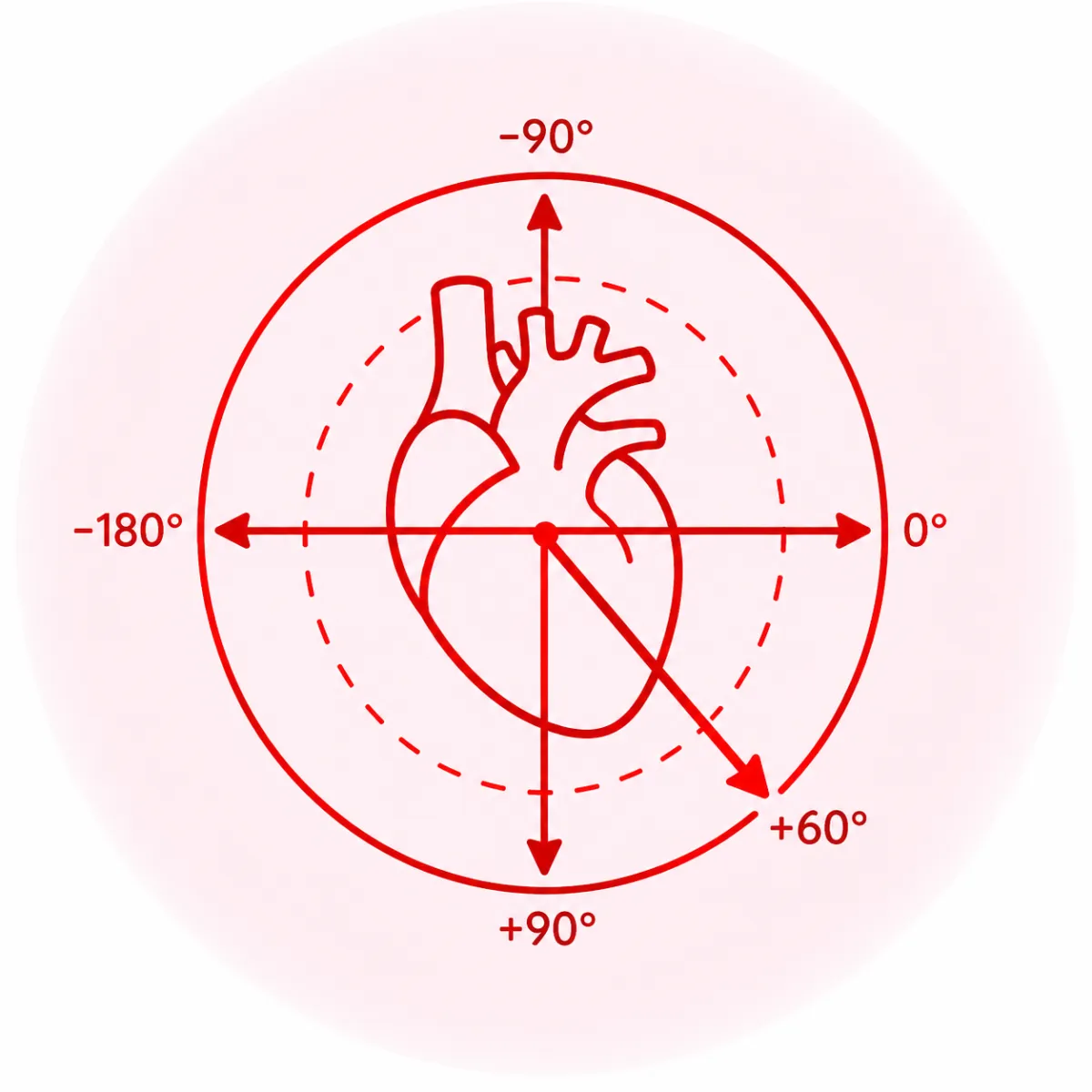
Module 07
Understand Axis, Chamber Enlargement & Hypertrophy
Interpret axis deviation and hypertrophy patterns with confidence.
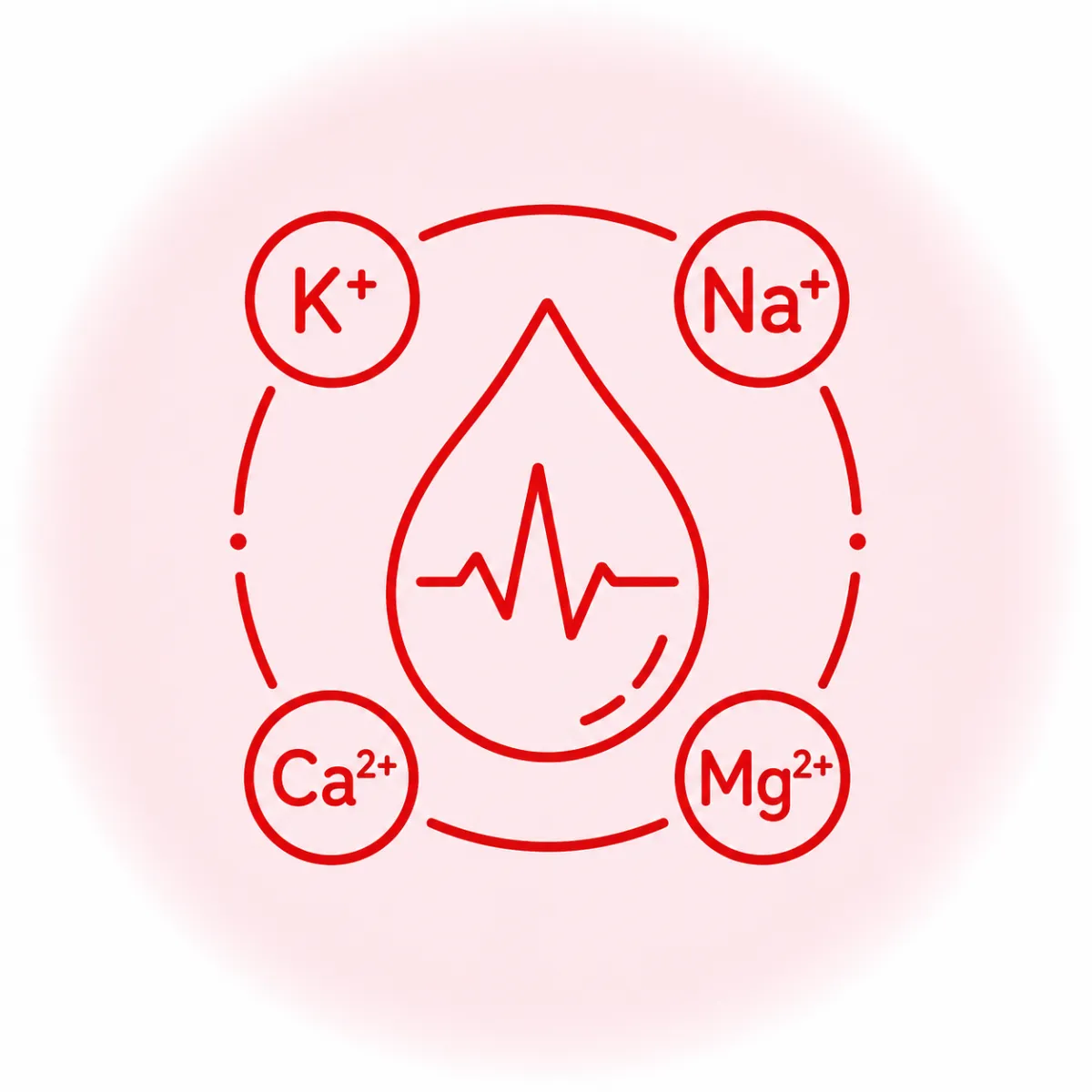
Module 08
Master Electrolyte &
Metabolic ECGs
Recognize hyperkalemia and other metabolic emergencies before lab results arrive..
Module 09
Recognize Acute
Coronary Syndromes
Detect STEMI early and
localize myocardial infarction quickly and accurately.

Module 10
Differentiate STEMI Mimics & High-Risk Patterns
Recognize Wellens, De Winter and other critical ECG patterns that are commonly missed.
Module 11
Master Emergency
ECG Syndromes
Identify Brugada, ARVC, HOCM, PE and other life-threatening ECG presentations.
Module 12
Recognize Pericardial Disease & Low Voltage ECGs
Diagnose pericarditis, tamponade and electrical alternans with confidence..

Module 13
Master the Syncope ECG Approach
Develop a structured approach to syncope and identify high-risk ECG findings.
📚
Lifetime
Course Access
Review the lessons whenever you need.
📱
Learn
Anywhere
Laptop + smartphone
Friendly
📝
Pre & Post Assessments
Measure your ECG improvement.
💬
Private WhatsApp Community
Discuss difficult ECGs and ask questions.
📜
Certificate of Completion
Receive your personalized certificate
Ready to master Emergency
ECG Interpretation?
This masterclass gives you a structured, practical framework to recognize life-threatening ECG patterns
with greater speed and confidence — so you're better prepared when every minute counts.
Founding Member Launch Offer
PKR 997 ONLY
STILL NOT SURE?
Frequently Asked Questions
Here are answers to the most common questions about the Emergency ECG Masterclass.
Is this course live or recorded?
This is a completely recorded, self-paced course designed specifically for busy doctors and healthcare professionals.
We understand that clinical duties, night shifts, emergency calls, and unpredictable schedules make it difficult to attend live classes. That's why every lesson is pre-recorded, allowing you to learn whenever it suits you best.
Whether you have 15 minutes between shifts or prefer to study on weekends, you can access the course anytime and learn at your own pace.
I'm not confident in ECG interpretation. Is this course suitable for me?
Yes.
This course has been designed to take you through a structured 7-step ECG interpretation framework, making it easier to approach ECGs systematically instead of relying on memorization.
Whether you're just starting your ECG journey or want to strengthen your existing skills, the lessons are designed to build your confidence step by step.
Can I watch the course on my mobile phone?
Absolutely.
The course is fully optimized for mobile phones, tablets, laptops, and desktop computers, allowing you to continue learning wherever you are.
All you need is an internet connection and your login credentials.
Do I need advanced cardiology knowledge before enrolling?
No.
This course focuses on practical emergency ECG interpretation, not advanced cardiology theory.
The emphasis is on recognizing life-threatening ECG patterns, understanding their clinical significance, and developing a systematic approach that you can confidently apply in real emergency settings.
How long will I have access to the course?
You'll receive lifetime access to the Emergency ECG Masterclass.
This means you can revisit the lessons anytime, refresh important concepts before exams, or review life-threatening ECG patterns whenever you need them during your medical career.
How will I receive access after payment?
Once your payment has been successfully verified, you'll receive your course access details via email and/or WhatsApp.
You can then log in to your student dashboard and start learning immediately.
Who is this course designed for?
This course is ideal for:
• Medical Students
• House Officers
• General Practitioners (GPs)
• FCPS Trainees
• MRCEM Candidates
• Emergency Medicine Residents
• ICU & Critical Care Doctors
• Any healthcare professional who wants to improve emergency ECG interpretation.
The course focuses on practical ECG interpretation that is directly applicable in emergency clinical practice.
Will I receive a certificate after completing the course?
Yes.
After successfully completing the course, you'll receive a Certificate of Completion, recognizing your participation in the Emergency ECG Masterclass.
WHY I HAD TO CREATE
THIS MASTERCLASS ?
During my House Job, I wanted a Cardiology rotation.
But I didn't get one.
At that stage, I could confidently identify STEMI Only.
But beyond that, ECG interpretation
felt uncertain.
Later, while preparing for my MRCEM examinations, I realised Emergency ECG interpretation extends far beyond myocardial infarction.
There are dozens of dangerous ECG patterns that I had never been taught systematically.
So I studied them. Practised them. Taught them.
Eventually conducted Emergency ECG workshops for junior doctors at my teaching hospital.
And then I realised something. The issue wasn't intelligence.
The issue wasn't effort.
The issue was that most of us had never been given a practical framework
specifically designed for recognizing Emergency ECG Patterns.
'' That's why
I created this Masterclass ''
Not to make doctors into Cardiologists.
But to help them become more confident recognising
life-threatening ECG patterns,
make faster clinical decisions, and intervene earlier when every minute matters.
Dr. Muhammad Nabeel
MBBS, MRCEM Part I & II Cleared
Resident Anaesthesiology
Emergency ECG Workshop Instructor
Emergency Medicine Educator
“The framework I teach in this Masterclass is the same framework I wish someone
had taught me during my House Job.”
Now, I want to pass that framework on to you.
IMAGINE YOUR NEXT SHIFT
You See an ECG
You Stay calm, Think clearly, and Act fast.
When you have a structured framework for interpreting
emergency ECGs, uncertainty is replaced by confidence—and every clinical decision becomes a
little clearer.
BEFORE THE MASTERCLASS
You second-guess yourself
Every unfamiliar ECG
feels overwhelming.
You hesitate
You're never quite sure whether
to escalate care.
You depend on WhatsApp
You wait for someone else to confirm your interpretation.
You recognise only the obvious
Dangerous ECG patterns are
easy to miss.
Every ECG feels different
There's no structured way
to approach it.
↓
AFTER THE MASTERCLASS
You approach ECGs systematically
There's no structured way to approach it.
You think with greater confidence
Your decisions become faster and more structured.it.
You rely less on others
You discuss cases instead of depending on others for every interpretation.
You recognise
high-risk patterns earlier
You know what findings deserve
urgent attention..
Every ECG follows the
same framework
One practical system you can
apply every shift.
A JOURNEY FROM
CONFUSION TO CONFIDENCE
⬇
7-Step Practical Framework
One structured system which you can apply to every emergency ECG—helping you recognize life-threatening patterns faster and approach every tracing
with greater confidence.
⬇
Confident Clinical Decision
Recognize high-risk ECGs earlier.
Think systematically instead of guessing.
Know when to escalate care.
NOTE : By Following the
7-STEP Practical Approach you
will be able to diagnose the
above ECG Pattern as BRUGADA SYNDROME , which is a
life-threatening condition that
can predispose to
Ventricular Arrhythmias.
WHAT YOU'LL LEARN
13 Modules,
58 Lessons, 300+ Minutes.
Every life-threatening
ECG pattern covered.
A structured framework that helps you recognize, interpret, and confidently act on life-threatening ECGs in the Emergency Department.
Module 01
Master the 7-Step ECG Framework
Develop one structured approach you can apply to every emergency ECG with confidence.
Module 02
Recognize AV Blocks & Conduction Disorders
Identify heart blocks accurately and know when urgent pacing is required.
Module 03
Identify Pre-Excitation Syndromes
Recognize WPW and LGL patterns before they become dangerous emergencies.
Module 04
Master Junctional & Escape Rhythms
Know when slow rhythms are benign—and when immediate intervention is needed.
Module 05
Interpret Supraventricular Tachycardias
Differentiate AF, AFL, SVT and sinus tachycardia with a systematic approach.
Module 06
Recognize Deadly Ventricular Arrhythmias
Identify VT, VF and other life-threatening ventricular rhythms without hesitation.
Module 07
Understand Axis, Chamber Enlargement & Hypertrophy
Interpret axis deviation and hypertrophy patterns with confidence.
Module 08
Master Electrolyte &
Metabolic ECGs
Recognize hyperkalemia and other metabolic emergencies before lab results arrive..
Module 09
Recognize Acute
Coronary Syndromes
Detect STEMI early and
localize myocardial infarction quickly and accurately.
Module 10
Differentiate STEMI Mimics & High-Risk Patterns
Recognize Wellens, De Winter and other critical ECG patterns that are commonly missed.
Module 11
Master Emergency
ECG Syndromes
Identify Brugada, ARVC, HOCM, PE and other life-threatening ECG presentations.
Module 12
Recognize Pericardial Disease & Low Voltage ECGs
Diagnose pericarditis, tamponade and electrical alternans with confidence..
Module 13
Master the Syncope ECG Approach
Develop a structured approach to syncope and identify high-risk ECG findings.
📚
Lifetime
Course Access
Review the lessons whenever you need.
📱
Learn
Anywhere
Laptop + smartphone
Friendly
📝
Pre & Post
Assessments
Measure your ECG improvement.
💬
Private WhatsApp
Community
Discuss difficult ECGs and ask questions.
📜
Certificate of
Completion
Receive your personalized certificate
Ready to master Emergency
ECG Interpretation?
This masterclass gives you a
structured, practical framework to recognize life-threatening
ECG patterns with greater speed
and confidence — so you're better prepared when every minute counts.
Founding Member
Launch Offer
PKR 997 ONLY
STILL NOT SURE?
Frequently Asked Questions
Here are answers to the most common questions about the Emergency ECG Masterclass.
Is this course live or recorded?
This is a completely recorded, self-paced course designed specifically for busy doctors and healthcare professionals.
We understand that clinical duties, night shifts, emergency calls, and unpredictable schedules make it difficult to attend live classes. That's why every lesson is pre-recorded, allowing you to learn whenever it suits you best.
Whether you have 15 minutes between shifts or prefer to study on weekends, you can access the course anytime and learn at your own pace.
I'm not confident in ECG interpretation. Is this course suitable for me?
Yes.
This course has been designed to take you through a structured 7-step ECG interpretation framework, making it easier to approach ECGs systematically instead of relying on memorization.
Whether you're just starting your ECG journey or want to strengthen your existing skills, the lessons are designed to build your confidence step by step.
Can I watch the course on my mobile phone?
Absolutely.
The course is fully optimized for mobile phones, tablets, laptops, and desktop computers, allowing you to continue learning wherever you are.
All you need is an internet connection and your login credentials.
Do I need advanced cardiology knowledge before enrolling?
No.
This course focuses on practical emergency ECG interpretation, not advanced cardiology theory.
The emphasis is on recognizing life-threatening ECG patterns, understanding their clinical significance, and developing a systematic approach that you can confidently apply in real emergency settings.
How long will I have access to the course?
You'll receive lifetime access to the Emergency ECG Masterclass.
This means you can revisit the lessons anytime, refresh important concepts before exams, or review life-threatening ECG patterns whenever you need them during your medical career.
How will I receive access after payment?
Once your payment has been successfully verified, you'll receive your course access details via email and/or WhatsApp.
You can then log in to your student dashboard and start learning immediately.
Who is this course designed for?
This course is ideal for:
• Medical Students
• House Officers
• General Practitioners (GPs)
• FCPS Trainees
• MRCEM Candidates
• Emergency Medicine Residents
• ICU & Critical Care Doctors
• Any healthcare professional who wants to improve emergency ECG interpretation.
The course focuses on practical ECG interpretation that is directly applicable in emergency clinical practice.
Will I receive a certificate after completing the course?
Yes.
After successfully completing the course, you'll receive a Certificate of Completion, recognizing your participation in the Emergency ECG Masterclass.
LIMITED -TIME INTRODUCTORY OFFER
Become More Confident
When Every Second Counts.
Join the Emergency ECG Masterclass and learn a practical 7-step framework to recognize
life-threatening ECG patterns quickly and confidently.
Even perfect for doctors busy in hospital shifts , this fully recorded course
gives you lifetime access, allowing you to learn anytime, anywhere, at your own pace.
PKR 997
• One-time payment • No recurring subscription
🎥 Lifetime Accesss
💻 Access on Any Device
📱 Learn at Your Own Pace
📚 13 Comprehensive Modules
▶️ 58 Bite-Sized Video Lessons
⏱️ 5+ Hours of Practical Training
💬 Exclusive WhatsApp Community
🏆 Certificate of Completion
LIMITED -TIME INTRODUCTORY OFFER
Become More Confident
When Every Second Counts.
Join the Emergency ECG Masterclass and learn a practical 7-step framework to recognize
life-threatening ECG patterns
quickly and confidently.
Even perfect for doctors busy in
hospital shifts , this fully recorded course
gives you lifetime access, allowing you to
learn anytime, anywhere, at your own pace.
PKR 997
• One-time payment • No recurring subscription